
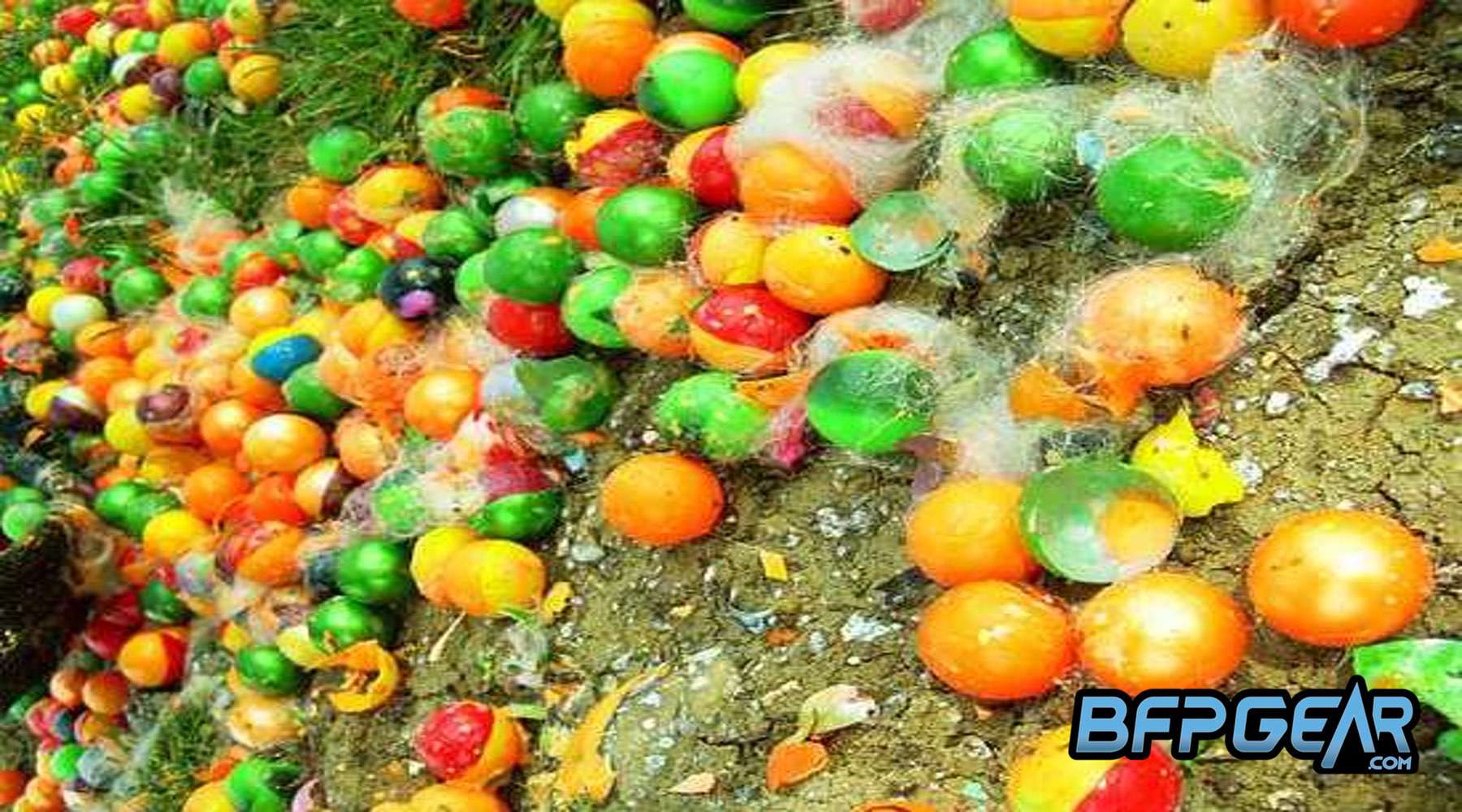
Most modern paintballs are designed to be biodegradable, water soluble and suitable for use at outdoor paintball fields. Unlike conventional paint, paintball fill is specifically formulated to wash away, while the shell is typically made from materials designed to break down over time.
That is especially important because thousands of paintballs can be fired during a single day at an outdoor paintball field. Understanding what paintballs are made of and what happens to them after they break can help explain why paintball can be played in grass, wooded areas and other outdoor environments.
Are Paintballs Environmentally Safe?
Modern paintballs from established manufacturers are generally designed with outdoor use in mind. Their shells are typically biodegradable, and the fill is usually water soluble so it can wash away rather than remaining like conventional oil-based paint.
However, biodegradable does not mean players should ignore the environment around them. Paintball should be played in appropriate areas, and players should avoid intentionally shooting wildlife, sensitive plants, waterways, buildings or property that is not part of the playing area.
Paintball fields should also follow appropriate local rules and responsible field-maintenance practices. Exact paintball materials and formulas can vary by manufacturer, so specific environmental or ingredient questions about a particular paintball are best answered using information from that manufacturer.
What Are Paintballs Made Of?
A paintball has two main components: the outer shell and the liquid fill inside.
The shell of a traditional paintball is commonly made from gelatin or similar biodegradable materials. This creates a shell strong enough to survive being handled and fired through a paintball gun, but brittle enough to break when it hits a player or other surface.
The fill is typically a water-soluble mixture that may contain ingredients such as polyethylene glycol (PEG), coloring agents and other components selected by the paintball manufacturer. Exact formulas vary between brands and types of paintballs.
One common misconception is that paintballs contain regular paint. They do not. Paintball fill is specifically formulated for use in paintballs and is designed to wash away much more easily than conventional paint.
How Long Do Paintballs Take to Biodegrade?
There is no exact amount of time that every paintball takes to completely break down. Weather, temperature, moisture, sunlight, soil conditions and the paintball's specific materials can all affect the process.
When paintballs break outdoors, rain and moisture begin softening the shell and washing away the water-soluble fill. Shell fragments continue to deteriorate as they are exposed to the environment.
Paintball residue may disappear relatively quickly in wet conditions, while shells and fill can remain visible longer in dry areas where there is little rain or moisture.
Does Paintball Fill Wash Away?
Paintball fill is designed to be water soluble, which means water helps dissolve and wash it away.
At outdoor paintball fields, rain and normal weather conditions gradually remove paint residue from bunkers, trees and other surfaces. Paintball fields may also wash bunkers and heavily used areas as part of regular field maintenance.
If paint gets on clothing or equipment, it is generally best to clean it rather than allowing it to dry for an extended period.
Are Paintballs Non-Toxic?
Modern paintballs from established manufacturers are formulated specifically for recreational paintball use rather than with conventional oil-based paint. However, exact ingredients vary by manufacturer, so it is better not to assume that every paintball from every source uses an identical formula.
Paintballs are not food and should not be intentionally eaten. If you need specific ingredient or safety information for a particular brand of paint, refer to information provided by that manufacturer.
Are Paintballs Safe for Grass and Plants?
Normal paintball use at established outdoor fields is generally compatible with grass, wooded fields and other outdoor playing environments. Because paintball fill is water soluble and the shells are designed to break down, residue does not remain like conventional oil-based paint.
However, biodegradable does not mean players should intentionally shoot plants, landscaping or other areas that are not part of the playing field. Responsible paintball play still means respecting the property and environment around you.
Are Paintballs Safe for Animals?
Players should never intentionally shoot wildlife or other animals with paintballs.
Even though paintballs are designed to break on impact and their materials are intended to break down outdoors, a paintball traveling at normal playing velocity can injure an animal just as it can cause injury to an unprotected person.
Paintballs and broken paint should also not be treated as animal food. If you are concerned about a pet or other animal ingesting paintballs, contact an appropriate veterinary professional and provide the paintball manufacturer's information if available.
Do Paintballs Stain?
Most modern paintball fill is designed to wash out, but staining can still depend on the paintball, fabric, surface and how long the fill is allowed to remain.
It is a good idea to wash paintball clothing after playing and clean paint from equipment rather than allowing it to sit for long periods. Certain porous or light-colored surfaces may be more susceptible to temporary or permanent discoloration.
What Happens to Unbroken Paintballs Left Outdoors?
Unbroken paintballs left outside will also be affected by moisture, heat and changing weather conditions. The shells can soften, swell or deform until the paintballs eventually break down.
That does not mean unused paintballs should simply be thrown on the ground. Leftover paint should be stored properly for your next day of play or disposed of responsibly.
If you plan to keep unused paint, read our guide on how to store paintballs properly to help keep them in good condition.
Paintball and the Environment FAQ
Are paintballs biodegradable?
Most modern paintballs are made with biodegradable shell materials and water-soluble fill designed to break down when exposed to outdoor conditions.
Are paintballs environmentally safe?
Modern paintballs from established manufacturers are generally designed for use at outdoor paintball fields, with biodegradable shell materials and water-soluble fill. Players and fields should still use paintballs responsibly and follow local environmental requirements.
Are paintballs filled with real paint?
No. Paintballs are not normally filled with conventional oil-based house paint. They use a specially formulated water-soluble fill designed for paintball use.
Will rain wash paintballs away?
Rain helps dissolve paintball fill and break down shell fragments. How quickly residue disappears depends on rainfall, temperature, humidity and the surface where the paintball broke.
Can you leave paintballs on the ground?
Broken paintballs used during normal play are designed to break down outdoors. However, unused paintballs and other paintball-related waste should still be collected, stored or disposed of responsibly rather than intentionally left behind.
Can paintballs hurt animals?
Yes. A paintball fired at normal playing velocity can injure an animal. Players should never intentionally shoot wildlife, pets or other animals.
Choosing and Storing Your Paintballs
Modern paintballs are designed to perform on the field while using shell and fill materials that can break down after play. Proper storage before playing is also important because temperature and moisture can affect the shape, shell and performance of your paint.
Browse our selection of paintballs available at BFPGear, or learn more about paintball care in our guide to storing paintballs properly.