
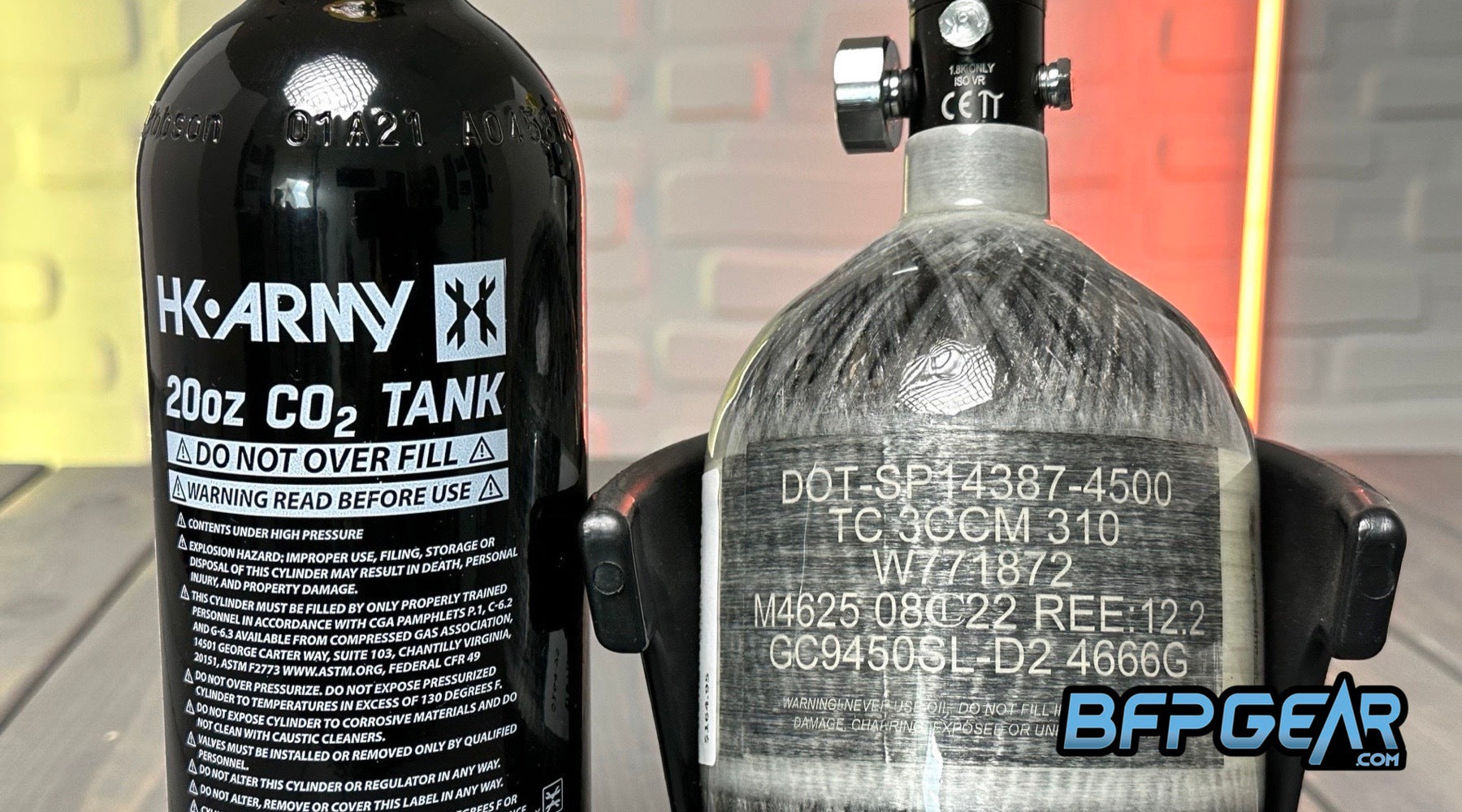
How to Check the Hydro Date on a CO2 or Compressed Air Paintball Tank
Getting turned away at the field because your tank is out of hydro is the worst. Whether you are checking a CO2 tank hydro date or a compressed air tank, it only takes a few seconds to confirm if your tank is still fillable and field legal.
This guide shows you exactly where to look, how to read the date, what hydro testing is, and when it makes more sense to replace your tank instead of retesting it.
Quick Answer: What the Hydro Date Means
The hydro date is the month and year your tank was manufactured or last hydro tested. Most paintball air tanks must be hydro tested every five years from the most recent test date. If your tank is past its hydro date, most fields and air stations will not fill it.
How to Find the Hydro Date on a Paintball Tank
The hydro date is shown as a month and year. Where it appears depends on the type of tank you have.
- CO2 tanks and aluminum compressed air tanks usually have the date stamped into the metal near the neck or around the valve area.
- Carbon fiber or composite compressed air tanks usually have the date printed on the label wrapped around the tank body, sometimes near other safety markings.
How to Read a Hydro Date
Most hydro dates appear as a month and year, like 03 21 or 03 2021. That example means March 2021.
To estimate when your next test is due, add five years to the most recent hydro date. For example, a tank marked 03 21 is typically due again around 03 26.
If you see multiple dates, the newest one is usually the most recent hydro test. If you are unsure which marking is the valid test date, do not guess. Ask the fill station or a hydro facility to confirm before you try to fill it.
CO2 Tanks vs Compressed Air Tanks
CO2 and compressed air tanks can both power paintball markers, but most modern setups use compressed air because it is consistent and widely supported by fields.
- CO2 tanks are common on older setups. Many fields do not fill CO2 anymore, and retesting can be inconvenient depending on your area.
- Compressed air tanks are the standard for modern paintball. They are available in aluminum and carbon fiber options for different budgets and weight goals.
What Happens During Hydro Testing
Hydrostatic testing checks whether a tank can safely hold pressure. During testing, the tank is inspected and then pressurized under controlled conditions to confirm it meets required safety standards.
If the tank passes, it is certified for another five years of use. If it fails due to damage or structural issues, it is permanently removed from service.
How Long Different Paintball Tanks Last
Not all paintball tanks have the same lifespan, even if they can be hydro tested.
- CO2 tanks can be difficult to retest in some areas, and in most cases the cost of hydro testing is close to or more than the cost of buying a new tank. Because of that, many players choose to replace them instead of retesting.
- Aluminum or steel compressed air tanks can technically be hydro tested repeatedly until they fail inspection, but for smaller aluminum tanks it often costs more to retest than to simply replace them with a new one.
- Carbon fiber or composite tanks have a maximum lifespan of 15 years from the original manufacture date. Once they reach that age, they can no longer be recertified, even if they pass a hydro test.
Do You Need to Replace Your Paintball Tank?
If your tank is out of hydro, you generally have two options: retest it or replace it. Many players choose to replace older tanks, especially if they want a lighter setup or are moving from CO2 to compressed air.
You likely need a new tank if any of these are true:
- Your tank is past the hydro date and your field will not fill it
- Your carbon fiber tank is close to, or past, the 15 year lifespan
- Your tank has deep gouges, cracks, heavy corrosion, or other visible damage
- You want a lighter setup, better balance, or a higher capacity option
If you are replacing an older tank, choose the option that fits your setup and field requirements:
- Shop CO2 paintball tanks for compatible CO2 powered markers
- Shop aluminum compressed air tanks for affordable, modern compressed air setups
- Shop carbon fiber and compressed air tanks for lightweight, high performance builds
Why Hydro Dates Matter at Paintball Fields
Most paintball fields require a valid hydro date to protect players and staff. A tank that is out of hydro, expired, or damaged can be dangerous, and it is commonly not allowed at regulated parks or fill stations.
Checking your hydro date before game day helps you avoid surprises and makes sure you can get air fills without delays.
Paintball Tank Hydro Date FAQ
How often do paintball tanks need hydro testing?
Most paintball air tanks need hydro testing every five years from the most recent test date. Always follow the markings on the tank and the policy at your local fill station.
Can a field fill my tank if it is past the hydro date?
Most fields and air stations will not fill a tank that is past hydro. Even if it is only slightly out of date, many locations follow strict policies and will refuse the fill.
How do I know if my carbon fiber tank is expired?
Carbon fiber tanks have a maximum lifespan of 15 years from the manufacture date. Once the tank reaches that age, it cannot be recertified for use, even if it would otherwise pass hydro testing.
What if my tank has more than one date on it?
Some tanks show multiple markings. The newest hydro test date is usually what matters for the next due date. If you are unsure which marking is the valid test date, ask a fill station or hydro testing facility to confirm.
Should I retest my tank or replace it?
If your tank is older, damaged, or near the end of its lifespan, replacing it is often the simplest move. If your tank is in good condition and still within its allowed lifespan, retesting may make sense.
Shop New Paintball Air Tanks
If your tank is out of hydro or nearing its lifespan limit, upgrading now helps ensure you do not get turned away at the field. Explore our selection of paintball tanks and accessories to find the right setup for your next game day.